
Sensorineural Hearing Loss (SNHL)
The Most Common Type of Hearing Loss: Explained

Affecting over 90% of adults with hearing loss, SNHL is caused by damage to the inner ear, and while it is rarely curable, it is highly treatable. Our audiologists in Lakeland and Winter Haven, FL are here to help.

Sensorineural hearing loss (SNHL) is the most common type of permanent hearing loss in adults. It occurs when the delicate hair cells inside the cochlea (inner ear), or the auditory nerve that carries signals to the brain, are damaged or deteriorate over time. Because these hair cells cannot regenerate, SNHL is generally permanent.
The causes range from the gradual effects of aging and noise exposure to sudden illness, medication side effects, and genetic factors. SNHL can be mild enough to miss parts of quiet conversations, or severe enough that even amplified speech is difficult to process.
The most important thing to understand is that while sensorineural hearing loss cannot be cured, it can be very successfully treated. Modern hearing aids, cochlear implants, and other hearing technologies have transformed outcomes for people with SNHL, allowing them to stay connected, engaged, and living fully. At Aspire Hearing Solutions, our doctoral-level audiologists are experts in diagnosing and managing SNHL across all degrees and causes.
What is sensorineural hearing loss?
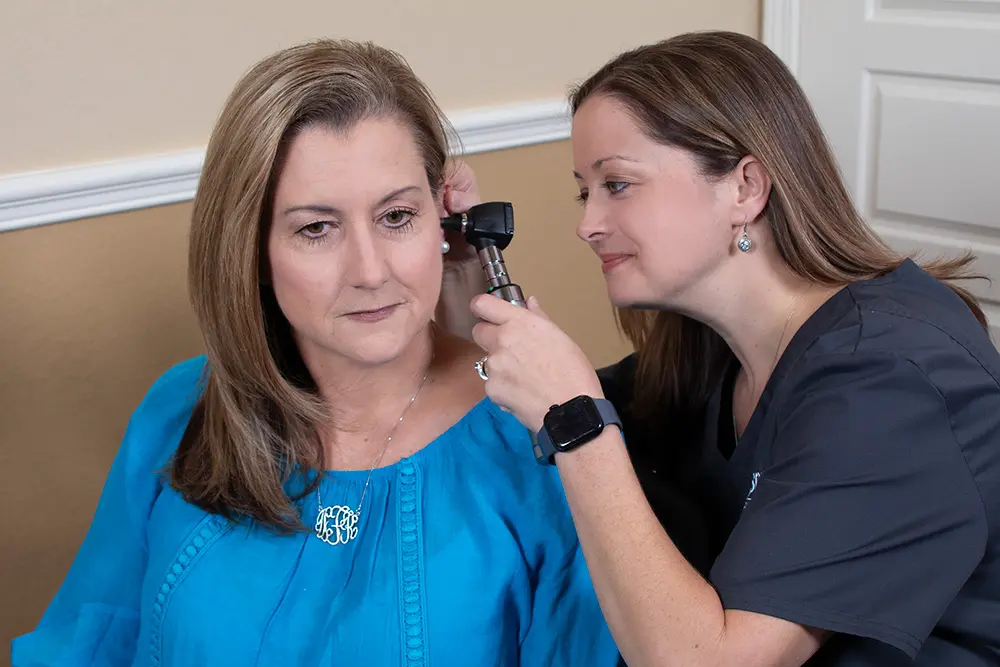 Sensorineural hearing loss is a type of hearing impairment that results from damage to the sensory cells or neural structures responsible for converting sound into signals the brain can interpret. Specifically, SNHL involves damage to either the:
- Cochlear hair cells (stereocilia): microscopic sensory cells inside the snail-shaped cochlea of the inner ear that vibrate in response to sound and trigger electrical signals
- Auditory nerve (vestibulocochlear nerve, cranial nerve VIII): carries electrical signals from the cochlea to the brain’s auditory processing centers
When either of these components is compromised, the brain receives a weaker, incomplete, or distorted sound signal, resulting in hearing loss. Unlike conductive hearing loss, where the problem lies in the mechanical delivery of sound through the outer and middle ear, SNHL is a problem inside the ear itself or along the nerve pathway.
Cochlear hair cells in humans do not regenerate, unlike some other cell types. Once inner ear hair cells are damaged or destroyed by noise, aging, illness, or other causes, they are gone permanently, making SNHL largely irreversible. Early detection and treatment are important because the longer SNHL goes unaddressed, the more the brain’s ability to process sound can deteriorate, compounding the impact of the hearing loss itself.
Researchers are actively exploring gene therapy and hair cell regeneration techniques that may one day reverse SNHL, but these remain experimental at present.
SNHL is by far the most common type of permanent hearing loss, accounting for approximately 90% of all reported hearing loss in adults. It affects:
- An estimated 38 million Americans
- 1 in 3 adults over the age of 65
- Nearly half of all adults over 75
- Approximately 1 in 1,000 newborns (congenital SNHL)
Despite its prevalence, the average person waits seven years after first noticing hearing difficulties before seeking help. Delaying treatment creates real consequences for how much hearing can be preserved and the long-term health effects associated with untreated hearing loss.
Types of Sensorineural Hearing Loss
SNHL is not a single, uniform condition. It can present in several distinct forms depending on which ears are affected, how quickly it develops, and its underlying cause.
Bilateral Sensorineural Hearing Loss
Affects both ears and is the most common presentation, especially with age-related (presbycusis) and noise-induced hearing loss. Both cochleae are typically affected together because the usual causes, including aging, noise exposure, ototoxic medications, genetic conditions, impact both ears.
Unilateral Sensorineural Hearing Loss (Single-Sided Deafness)
Affects only one ear. Common causes include acoustic neuroma (a benign tumor on the auditory nerve), Ménière’s disease, sudden SNHL, and viral infections. Because it disrupts spatial hearing and sound localization, it can be disorienting and makes conversation in noisy settings especially difficult. Treatment options include hearing aids, CROS (contralateral routing of signal) devices, and bone-anchored implants.
Asymmetrical Sensorineural Hearing Loss
Hearing loss affects both ears but is notably worse in one. Mild asymmetry is common, but significant or rapidly developing asymmetry, especially in younger people, warrants further workup to rule out acoustic neuroma or other retrocochlear causes.
Sudden Sensorineural Hearing Loss (SSHL): Medical Emergency
Defined as a 30+ decibel loss across at least three consecutive frequencies within 72 hours. People often notice it upon waking, hear a sudden “pop,” or experience it with tinnitus and dizziness. About 90% of cases are idiopathic, though viral, vascular, and autoimmune causes are suspected.
This is a medical emergency requiring treatment (typically high-dose oral corticosteroids, sometimes with intratympanic injections) that should start within 24–72 hours. Prompt treatment leads to partial recovery in 50–65% of cases. Delayed treatment significantly worsens outcomes, so any sudden hearing loss, even if you suspect a cold or earwax, requires immediate medical evaluation.
High-Frequency Sensorineural Hearing Loss
The most common SNHL pattern. High-pitched sounds (2,000–8,000 Hz) are affected first because the hair cells that detect them sit at the cochlea’s base, the area most vulnerable to noise and aging. Damage in this area causes trouble hearing consonants (s, f, th, sh), women’s and children’s voices, birdsong, and speech in background noise, even with appropriate volume.
Low-Frequency Sensorineural Hearing Loss
Less common, mainly linked to Ménière’s disease and some autoimmune conditions. This type of SNHL causes difficulty with vowel sounds, deep voices, and bass tones, and often fluctuates over time, particularly with Ménière’s.
Symptoms of Sensorineural Hearing Loss
Because SNHL typically develops gradually, its symptoms can be easy to dismiss, rationalize, or simply adapt to without realizing how much is being missed. Many people spend years adjusting before acknowledging the pattern.
- Difficulty understanding speech, including mumbled or unclear words, even with adequate volume
- Trouble following conversations with background noise (restaurants, social gatherings, meetings) or withdrawing from these social situations
- Frequently asking others to repeat themselves
- Needing to turn up the TV, phone, or radio louder than others prefer
- Missing parts of words, especially consonant sounds like s, f, sh, th, ch
- Difficulty understanding women’s or children’s voices more than men’s
- Struggling on the phone, particularly in one ear
- Tinnitus: ringing, buzzing, hissing, or other phantom sounds in one or both ears
- Sounds seeming muffled or less sharp than they once were
- Unusual fatigue after conversations, a sign the brain is working overtime to fill in missing sounds
- Difficulty locating where sounds are coming from (particularly in unilateral or asymmetric SNHL)
One of the most characteristic features of sensorineural hearing loss is the distinction between hearing and understanding. Many people with SNHL can detect that someone is speaking, but they cannot make out the words clearly, particularly in anything other than quiet, one-to-one settings. This is because high-frequency consonant sounds (the phonemes that give words their distinctiveness) are typically the first casualties of cochlear hair cell damage.
This leads to a common and frustrating experience: ‘I can hear you, but I just can’t understand you.’ It is also the reason that simply turning up the volume does not fully solve SNHL. The problem is not loudness, but clarity.
What causes sensorineural hearing loss?
SNHL can be caused by a wide range of concerns that include preventable and genetic conditions and those arising from illness or medication. Understanding the cause guides treatment and helps patients understand whether their hearing loss might progress.
1. Age-Related Hearing Loss (Presbycusis)
The most common cause of SNHL worldwide. Cochlear hair cells gradually deteriorate with age, usually becoming noticeable in the 50s–60s, though changes begin decades earlier.
- Typically affects both ears equally, mainly in high frequencies
- Affects 1 in 3 adults over 65, and nearly half of adults over 75
- Not preventable, but regular hearing evaluations allow early treatment before it impacts quality of life
2. Noise-Induced Hearing Loss (NIHL)
The second most common cause of hearing loss – and the most preventable. It’s caused by prolonged exposure to sounds above 85 decibels from occupational noise, recreational activities, or personal audio devices.
- Damage is cumulative and permanent
- Produces a distinctive “notch” on the audiogram at 4,000 Hz
- Affects about 17% of adults aged 20–69 (CDC)
- Entirely preventable with proper hearing protection
3. Genetic and Congenital Causes
These causes are responsible for 50–60% of congenital hearing loss, with over 100 genes identified as contributors.
- Some cases are present at birth and caught on newborn screening; others progress later in life
- Syndromic (~30% of genetic cases): hearing loss is one feature of a broader condition, e.g. Usher syndrome, Waardenburg syndrome, Pendred syndrome
- Non-syndromic (more common): hearing loss is the primary feature; Connexin 26 (GJB2) mutations are the most frequent cause
4. Ototoxic Medications
Over 200 medications can damage the cochlea or auditory nerve, including:
- Aminoglycoside antibiotics (gentamicin, streptomycin, tobramycin), especially at high doses or prolonged use
- Platinum-based chemotherapy (cisplatin, carboplatin), especially in children
- Loop diuretics (furosemide/Lasix), especially combined with aminoglycosides
- High-dose or chronic aspirin/NSAIDs (often reversible after stopping)
- Quinine and antimalarial drugs
- Some antivirals and antifungals
If prescribed any of these, especially for cancer treatment, ask about your hearing baseline and follow-up hearing monitoring.
5. Viral Infections
Several viruses can damage the cochlea or auditory nerve:
- Mumps: historically, a leading cause of unilateral sudden SNHL in children; however, it’s now rare due to vaccination
- Measles: can cause bilateral SNHL
- Meningitis: a major cause of acquired SNHL, particularly in children; bacterial cases can cause cochlear ossification
- Cytomegalovirus (CMV): the most common non-genetic cause of congenital hearing loss
- Herpes zoster (Ramsay Hunt syndrome): causes sudden SNHL with facial paralysis and ear pain
6. Autoimmune Inner Ear Disease (AIED)
A less common cause where the immune system attacks cochlear structures.
- Presents as rapidly progressive bilateral SNHL over weeks to months
- May include vestibular symptoms
- One of the few SNHL types that may respond to corticosteroid or immunosuppressive treatment
7. Ménière’s Disease
Caused by endolymphatic hydrops (fluid pressure buildup in the inner ear). Produces a classic tetrad of symptoms:
- Fluctuating low-frequency SNHL
- Episodic vertigo (20 minutes to several hours)
- Tinnitus
- Aural fullness
Usually starts in one ear; hearing loss may become permanent over time, and both ears become involved in 30–40% of cases.
8. Acoustic Neuroma (Vestibular Schwannoma)
A benign, slow-growing tumor on the auditory nerve.
- Typically causes unilateral, progressive SNHL with tinnitus, sometimes balance problems
- Rare (~1 in 100,000 people/year), but important to rule out in unexplained asymmetric or unilateral SNHL
- MRI is the gold-standard diagnostic tool
- Treatment includes observation, stereotactic radiosurgery, or microsurgical removal
9. Head Trauma
Traumatic brain injury, skull fractures, or barotrauma can damage the cochlea, inner ear membranes, or auditory nerve.
- Temporal bone/otic capsule fractures are linked to severe SNHL and balance dysfunction
- Cochlear concussion from blunt trauma can cause sudden SNHL even without a visible fracture
10. Perilymph Fistula
A tear in the membrane(s) separating the inner and middle ear, often from physical exertion, barotrauma, or head trauma.
- Causes fluctuating SNHL, tinnitus, and dizziness
- Diagnosis can be difficult
- Treatment ranges from bed rest to surgical repair (patching)
How Sensorineural Hearing Loss Is Diagnosed
Diagnosing SNHL requires a comprehensive audiological evaluation. At Aspire Hearing Solutions, our audiologists use a full battery of tests to confirm the type, degree, configuration, and likely cause of your hearing loss, giving you and your treatment team the complete picture needed to chart the best course forward.
Pure Tone Audiometry
The foundation of every hearing evaluation. You will wear headphones and indicate when you can just barely hear tones at various frequencies and volumes. Results are plotted on an audiogram, showing your hearing thresholds across the frequency range.
Bone Conduction Testing
A small vibrating device placed behind the ear sends sound directly to the cochlea, bypassing the outer and middle ear. Comparing bone conduction thresholds to air conduction thresholds (from pure tone testing) shows whether hearing loss is sensorineural, conductive, or mixed:
- SNHL: air and bone thresholds are both reduced and closely match (no gap)
- Conductive hearing loss: a gap exists between air and bone thresholds
Speech Audiometry
Tests your ability to detect and understand speech at various volumes. Speech recognition scores (percentage of words correctly identified at a comfortable volume) measure the real-world communication impact of hearing loss, not just sound detection. Poor scores may point toward additional interventions, such as a cochlear implant evaluation.
Tympanometry and Acoustic Reflex Testing
Evaluates middle ear function.
- Tympanometry is typically normal in pure SNHL, confirming the middle ear isn’t the source
- Acoustic reflexes may be elevated or absent if the auditory nerve is involved
Otoacoustic Emissions (OAE) Testing
A small microphone in the ear canal measures faint sounds produced by healthy cochlear hair cells in response to a stimulus.
- Absent or reduced OAEs confirm cochlear hair cell damage in significant SNHL
- Also widely used to screen newborns and young children
Auditory Brainstem Response (ABR)
Scalp electrodes measure electrical activity from the auditory nerve and brainstem in response to clicking sounds. Used to:
- Identify retrocochlear pathology (e.g., acoustic neuroma)
- Evaluate hearing in infants and young children who can’t complete behavioral testing
- Characterize auditory neuropathy spectrum disorder (ANSD)
When Imaging Is Ordered
Your audiologist or treating physician may recommend imaging in specific circumstances:
- MRI with gadolinium contrast: the gold standard for detecting acoustic neuroma and other retrocochlear lesions; recommended for any unexplained unilateral or asymmetric SNHL
- CT scan: useful for evaluating cochlear anatomy prior to cochlear implant surgery, and for identifying bony abnormalities
A comprehensive evaluation at Aspire Hearing Solutions typically takes 45–60 minutes and covers your hearing history, physical ear examination, and the full audiometric test battery. You will leave with a clear picture of your hearing health and your options.
Treatment for Sensorineural Hearing Loss
While SNHL cannot be reversed in most cases, it is one of the most successfully managed health conditions. The treatment landscape has advanced dramatically in recent decades. Today’s options range from small, powerful hearing aids that stream directly from your phone to surgically implanted devices that can restore functional hearing even in profound loss.
The right treatment depends on the degree of your hearing loss, the configuration of your audiogram, your speech recognition ability, your lifestyle and communication needs, and your personal preferences. Your audiologist at Aspire Hearing Solutions will guide you through every option.
1. Hearing Aids
The primary treatment for mild to severe SNHL, modern hearing aids are far more sophisticated than previous devices. They use digital signal processing to amplify the frequencies you are missing, reduce background noise, and separate speech from surrounding sound. Most modern hearing aids are nearly invisible, and many connect wirelessly to devices like smartphones or TVs.
Every hearing aid we fit at Aspire Hearing Solutions is precisely programmed to your specific audiogram using real-ear measurement, not generic factory settings. This makes a significant difference in clarity and comfort.
2. Cochlear Implants
For individuals with severe to profound SNHL who do not receive adequate benefit from hearing aids, cochlear implants offer a surgical solution that can dramatically restore functional hearing.
A cochlear implant bypasses damaged cochlear hair cells entirely with a surgically implanted receiver and an electrode array placed in the cochlea. An external sound processor captures and processes sound, then sends signals to the implant, directly stimulating the auditory nerve. Most cochlear implant recipients achieve significantly improved speech understanding, often well above 70–90% in quiet listening conditions.
Cochlear implants are approved for adults and children as young as 12 months and require a full audiological assessment, medical evaluation, and often speech-language assessment to determine candidacy.
3. Bone-Anchored Hearing Devices (BAHAs and Osia)
Bone-anchored devices transmit sound vibrations through the skull directly to the functioning cochlea, bypassing the outer and middle ear. They are ideal for individuals with single-sided deafness (SSD) or mixed hearing loss and find conventional hearing aids insufficient. Modern systems include surgically implanted titanium fixtures or non-surgical adhesive processors.
4. Treatment for Sudden SNHL (Medical Emergency)
Sudden SNHL is a medical emergency. Within 24–72 hours of onset, first-line treatment is high-dose oral corticosteroids. Another treatment option is intratympanic corticosteroid injections administered directly into the middle ear. Approximately 50–65% of patients treated promptly recover meaningful hearing, while delayed treatment is associated with significantly poorer outcomes.
5. Assistive Listening Devices (ALDs)
ALDs supplement hearing aids in specific listening situations. They include:
- Bluetooth streaming devices: Delivers audio directly from phones, TVs, and computers to hearing aids
- Remote microphone systems: microphones that send speech directly to hearing aids across distance; particularly useful in classrooms, meetings, or restaurants
- TV listening systems: amplify TV audio through wireless headphones or streaming
- Captioned phones and apps: display real-time captions of phone conversations
- Alerting devices: vibrating or flashing devices for doorbells, phone calls, and alarm clocks
6. Emerging Treatments (Research Stage)
While not yet available in clinical practice, several promising research directions give reason for optimism:
- Hair cell regeneration: gene therapy and pharmacological approaches to regenerate damaged cochlear hair cells are in early human trials
- Gene therapy for genetic SNHL: targeted delivery of functional genes to restore hair cell function; significant breakthroughs reported in children with OTOF gene mutations
- Stem cell therapy: transplantation of cochlear progenitor cells to restore hair cell populations
These developments represent a potential paradigm shift in SNHL treatment. While timelines remain uncertain, the pace of progress is accelerating. Our team stays current with advances so we can discuss emerging options with patients as they become available.
Living Well with Sensorineural Hearing Loss
A diagnosis of SNHL is not a sentence to a diminished life. With the right treatment and strategies, most people with sensorineural hearing loss live fully engaged, active lives, working, socializing, traveling, and staying connected to the people and moments that matter most.
Treatment Changes Everything
Treating hearing loss significantly improves quality of life, social engagement, cognitive function, relationships, and mental health. Patients who have been fitted with well-programmed hearing aids often describe the experience as transformative, not just in how they hear but also in how they feel. Many report they had not realized how exhausting daily life had become until they no longer strained to hear.
Communication Strategies
Hearing technology is the foundation, but communication strategies can further improve everyday experiences:
- Positioning: Face the speaker in good lighting; this supports natural lip-reading, which most people rely on more than they realize
- Reducing background noise: Choose quieter settings for important conversations and mute TVs/radios while talking
- Informing others: Letting family, friends, and colleagues know about your hearing loss reduces awkwardness and improves communication
- Aural rehabilitation: Structured listening practice and communication coaching helps your brain adapt to amplified sound after cochlear implant activation or extended hearing loss
Mental Health and Hearing Loss
The emotional impact of SNHL, particularly when it is progressing or newly diagnosed, should not be minimized. Common responses include feelings of frustration, grief, self-consciousness, anxiety, and depression. Untreated hearing loss is also associated with significantly elevated rates of depression and anxiety.
Treating hearing loss is often an effective step in improving emotional wellbeing. Let our audiology experts know if you are struggling emotionally, and we can connect you with appropriate support resources.
Supporting a Family Member with SNHL
If a family member has SNHL, your role matters enormously. Get their attention before speaking, speak clearly without shouting, reduce background noise when possible, and be patient. Encouraging them to seek evaluation and treatment, gently and without pressure, can make a real difference.
Sensorineural Hearing Loss and Your Overall Health
The evidence linking untreated SNHL to broader health outcomes has become increasingly compelling. The inner ear is not isolated. What happens there is connected to cardiovascular health, brain function, mental wellbeing, and physical safety.
Dementia and cognitive decline
Mild SNHL doubles dementia risk; severe SNHL increases it fivefold. Likely drivers include the extra cognitive load of compensating for hearing loss and social withdrawal.
Depression and anxiety
Social isolation due to hearing difficulties is a leading driver of depression, especially in older adults.
Falls
People with hearing loss are more likely to fall, likely due to hearing’s role in spatial awareness and cognitive load; treating hearing loss lowers this risk.
Cardiovascular disease
The inner ear is highly sensitive to blood flow, creating a bidirectional relationship between hearing loss and cardiovascular disease, hypertension, and diabetes.
Listening fatigue
The effort of processing degraded sound drains mental energy, affecting mood, productivity, and patience.
For a full exploration of how hearing loss connects to your health, see our dedicated page.
Can sensorineural hearing loss be prevented?
Age-related SNHL can’t be fully prevented as cochlear hair cell decline is a natural part of aging. Other forms, especially noise-induced hearing loss, are largely preventable. For any type of SNHL, regular hearing checks allow early treatment before communication is significantly affected.
- Keep personal audio volumes safe: Follow the 60/60 rule – no more than 60% volume, for no more than 60 minutes.
- Get regular hearing evaluations: Earlier intervention means better outcomes. For adults under 50, every 3–5 years; adults over 60 annually.
- Protect against infections: Vaccinations, particularly for measles, mumps, meningitis, or varicella, can prevent infectious causes of SNHL.
- Manage cardiovascular risk factors: Maintain healthy blood pressure, blood sugar levels, and cardiovascular fitness to support inner ear health.
- Discuss medication risks: If you are being prescribed potentially ototoxic medications, ask about baseline hearing testing and monitoring.
- Seek immediate care for sudden hearing changes: Sudden SNHL is a medical emergency. Do not wait.
- Hearing protection in noisy environments: Noises above 85 dB, including concerts, power tools, firearms, and occupational noise, can cause cumulative damage. Custom-molded ear protection offers the best combination of protection and sound quality.
For a comprehensive guide to protecting your hearing at every age, visit our prevention page.
Frequently Asked Questions: Sensorineural Hearing Loss
Is sensorineural hearing loss permanent?
In most cases, yes. Once damaged, cochlear hair cells cannot regenerate, making the underlying hearing loss permanent. However, permanent does not mean untreatable. Modern hearing aids and cochlear implants are highly effective at managing SNHL and restoring functional hearing for the vast majority of people. The one significant exception is sudden sensorineural hearing loss (SSNHL), which can be partially or fully reversed if treated within 24–72 hours with corticosteroids.
Can sensorineural hearing loss be reversed or cured?
In most cases, no. Treatment can restore functional hearing to a degree that has a transformative impact on quality of life. The only form of SNHL with a meaningful chance of reversal is sudden SNHL when treated promptly with steroids. Researchers are actively pursuing hair cell regeneration and gene therapy approaches that may change this in the future, but these are not yet available clinically.
What is the most common cause of sensorineural hearing loss?
The two most common causes of adult SNHL are age-related hearing loss and noise-induced hearing loss. Noise-induced hearing loss is also the most preventable.
What does sensorineural hearing loss feel like?
Most people notice sounds, especially speech, becoming gradually less sharp or clear. Conversations in background noise take real effort, and voices (often women;’ or children’s) become harder to distinguish, with words sounding mumbled even when clearly spoken. Tinnitus (ringing or buzzing) often comes along with it. As many put it: “I can hear that someone is talking, but I can't make out what they're saying.”
What is the difference between sensorineural and conductive hearing loss?
Frequently temporary and reversible, conductive hearing loss stems from mechanical problems in the outer or middle ear, such as earwax, infections, or structural issues. Sensorineural hearing loss is usually permanent and involves the cochlea’s hair cells or auditory nerve. Causes include aging, noise, illness, genetics, or medication. Treatment differs significantly between the two, and your audiologist will perform a comprehensive evaluation to determine which type you have. Learn about conductive hearing loss →
How quickly does sensorineural hearing loss progress?
Progression varies by cause. Age-related SNHL typically declines slowly over years, often just a few decibels annually, while noise-induced SNHL worsens with ongoing exposure. Some causes, including autoimmune inner ear disease, Ménière’s disease, or acoustic neuroma, progress more rapidly. Sudden SNHL occurs within 72 hours by definition. Regular audiograms (every one or two years) help track changes to adjust treatment as needed.
At what age does sensorineural hearing loss typically develop?
Age-related SNHL usually becomes noticeable in the 50s and 60s, though cochlear changes begin much earlier. But SNHL can develop at any age. Congenital SNHL is present from birth, and noise-induced loss can appear in the 20s and 30s with significant noise exposure. Since there’s no age threshold, regular hearing evaluations are recommended starting in adulthood.
Do hearing aids fix sensorineural hearing loss?
Hearing aids cannot reverse cochlear damage, but they can significantly restore functional hearing. When well-fitted and precisely programmed, they amplify the specific frequencies you’re missing, improve speech clarity, and reduce listening effort, making them highly effective for mild to moderate SNHL. For severe or profound SNHL where hearing aids fall short, cochlear implants offer a more powerful alternative.
Is sensorineural hearing loss hereditary?
Yes. Genetics play a significant role in many cases of SNHL, and 50–60% of congenital hearing loss has a genetic basis. Many forms of progressive adult SNHL also have genetic contributors. If multiple family members have experienced hearing loss, particularly at a young age, genetic factors may be involved. Genetic counseling is available for families who want to understand their risk.
Can children get sensorineural hearing loss?
Yes. Congenital SNHL is present at birth and affects approximately 1–3 in 1,000 newborns. Newborn hearing screening programs are designed to catch congenital hearing loss early, as early intervention (the first 6 months) is strongly associated with better speech, language, and developmental outcomes. Children can also develop SNHL from meningitis, viral infections, noise exposure, ototoxic medications, or genetic conditions. We welcome patients of all ages at Aspire Hearing Solutions.
What is sudden sensorineural hearing loss and what should I do?
Sudden SNHL is defined as a hearing loss of 30 dB or more across three frequencies occurring within 72 hours, and it is a medical emergency. Seek evaluation immediately, even if you suspect a simpler cause like earwax or a cold. Treatment with corticosteroids must begin within 24–72 hours for the best chance of recovery. Do not wait to see if it improves on its own. Call us or go to urgent care right away.
Sensorineural Hearing Loss Treatment in Lakeland and Winter Haven, FL
At Aspire Hearing Solutions, our doctoral-level audiologists have the expertise, technology, and genuine commitment to patient care to help you navigate SNHL at any stage, whether you are noticing new changes, have been recently diagnosed, or are looking to improve on an existing treatment plan.
We serve patients across Polk County, including Lakeland, Winter Haven, Haines City, Dundee, Frostproof, Tampa, and surrounding communities. We welcome patients of all ages, including children and infants requiring newborn follow-up evaluation.
Our approach to SNHL management goes beyond selecting a hearing aid:
- Comprehensive audiometric evaluation to fully characterize your hearing loss
- Detailed review of your medical history, lifestyle, and communication goals
- Precise hearing aid programming using real-ear measurement, not default settings
- Ongoing follow-up care and adjustments as your needs evolve
- Coordination with ENT physicians and other specialists when medical evaluation is needed
- Support and education for family members
We are proud members of the HearingUp Network, a national community of independent audiologists committed to honest, evidence-based, patient-first hearing care.
You deserve to hear clearly. Schedule a comprehensive hearing evaluation at our Lakeland or Winter Haven office and let our team give you the full picture of your hearing health, and the options available to you.