
Types of Hearing Aids in Lakeland & Winter Haven, FL
Choosing a hearing aid is more than picking a style off a shelf. The right device depends on your degree of hearing loss, the shape of your ear canal, your daily lifestyle, your priorities around discretion, and the technology features that matter most to you. With so many options on the market it can be hard to know where to start.
We’ll walk you through everything you need to know to have an informed conversation with our audiologist. Including how to match a style to your life, what the rechargeable conversation is really about, and what modern hearing aid technology actually looks like.
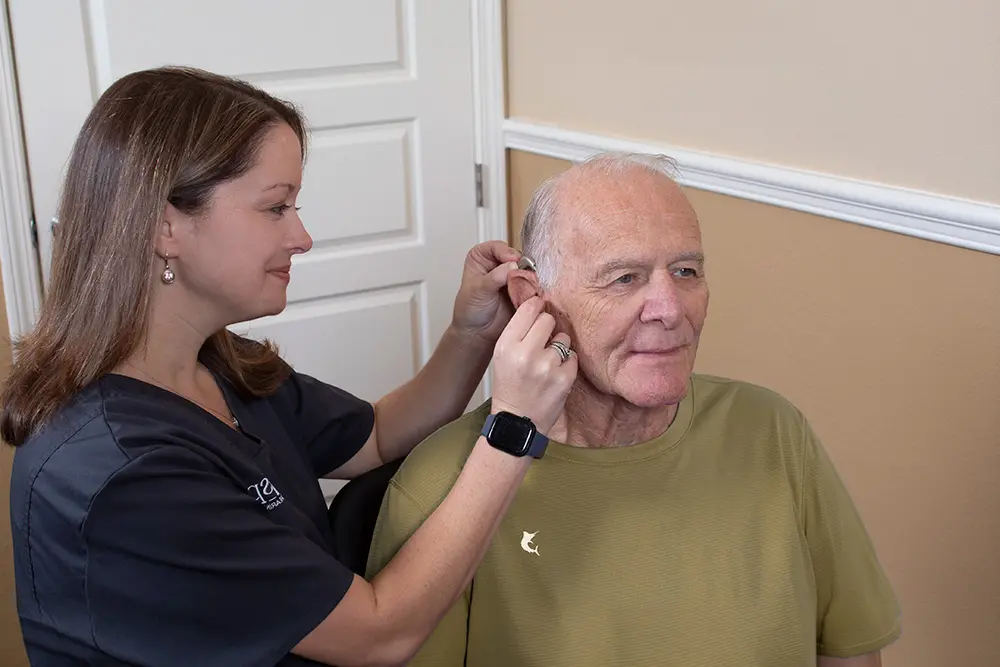
How to Choose a Hearing Aid Style
Before thinking about which style of hearing aid fits your ear, think about these four questions. Your answers will guide everything else.
What is your degree of hearing loss? This is the most important factor. Smaller, more discreet styles like IIC and CIC work well for mild-to-moderate loss but aren’t powerful enough for severe or profound loss. Larger styles like BTE and some RIC devices can handle the full spectrum. You need an audiogram to know where you fall.
What is your lifestyle? Are you active: exercising, swimming, working outdoors in Central Florida’s heat and humidity? Do you spend a lot of time in noisy social environments: restaurants, events, group conversations? Are you in meetings or professional settings where you need to hear at a distance? These lifestyle factors influence which features and styles will actually serve you day to day.
Do you have dexterity or vision concerns? Small hearing aids like IIC and CIC require fine motor skill to insert, remove, and maintain, including handling tiny batteries. If you have arthritis, limited dexterity, or reduced vision, a larger style with rechargeable batteries and push-button controls will be significantly easier to manage.
What are your priorities: discretion, simplicity, or features? Some patients care most about no one knowing they’re wearing hearing aids. Others want as much technology as possible: Bluetooth, directional microphones, AI noise reduction, app control. Some want the simplest device that gets the job done. Understanding your own priorities helps narrow the field considerably.
Hearing Aid Styles
RIC / Receiver-in-Canal (also called RITE Receiver-in-the-Ear)
Best for: Adults with mild to severe hearing loss. One of the most widely recommended styles.
The most commonly fitted style today, RIC is a small housing unit that sits discreetly behind the ear, with an ultra-thin wire that carries the receiver directly into the ear canal. RIC devices are barely visible, comfortable, and highly capable, allowing the ear canal to remain largely open. These modern devices are rechargeable, support Bluetooth streaming, and accommodate a wide range of hearing loss levels.
Tradeoffs: The receiver wire is a wear point and may occasionally need replacing. Not ideal if the ear canal is chronically draining.
BTE / Behind-the-Ear
Best for: All ages and all degrees of hearing loss, including severe and profound.
BTE devices house all electronics in a casing behind the ear and deliver sound through a custom earmold that fits the ear canal. They’re available with rechargeable batteries, Bluetooth streaming, and directional microphone technology. BTEs are the standard choice for young children as they’re durable, easy to maintain, and compatible with assistive listening systems used in schools.
Tradeoffs: More visible than canal-style options. The earmold can cause an occlusion effect for those with residual low-frequency hearing, though open-fit tubing addresses this.
Open-Fit BTE: A variation using a thin tube instead of a custom earmold keeps the ear canal open, works well for mild-to-moderate high-frequency loss, and is very discreet.
ITE / In-the-Ear
Best for: Mild to severe hearing loss. Well-suited for patients with dexterity challenges.
ITE devices are custom-molded to fill the outer bowl of the ear. These larger style aids can accommodate more technology, including rechargeable batteries, volume controls, and Bluetooth. Their larger size is easier to handle for patients who experience difficulties with smaller devices.
ITEs are available in a range of skin-tone colors for reduced visibility and are a practical choice for patients who want a custom fit without the complexity of a canal-fitting device.
Tradeoffs: More visible than behind-the-ear styles. They can pick up wind noise due to microphone placement.
ITC / In-the-Canal
Best for: Mild to moderately severe hearing loss.
ITC devices sit primarily inside the ear canal, with only a small faceplate visible at the canal entrance. More discreet than ITE devices, they still offer reasonable room for features. Some models include volume controls and wireless connectivity. They are custom-molded to your specific canal shape.
Tradeoffs: Too small for rechargeable batteries in most models. Smaller controls can be harder to manage for those with dexterity issues. Earwax buildup affects performance, requiring regular cleaning.
CIC / Completely-in-Canal
Best for: Mild to moderate hearing loss in adults with average or larger ear canals.
CIC devices sit almost entirely within the ear canal, with only a small removal wire visible. They’re effectively invisible in most ears from a normal conversational distance, and their deep placement reduces wind noise and takes advantage of the natural acoustics of the ear canal.
Tradeoffs: CIC devices are often too small for rechargeable batteries or Bluetooth streaming. They require a canal large enough to comfortably house the device and need more frequent cleaning due to proximity to earwax. Not suitable for severe hearing loss.
IIC / Invisible-in-Canal
Best for: Mild to moderate hearing loss in adults with adequately sized ear canals. Patients for whom discretion is the top priority.
IIC is the deepest-fitting, smallest, and most invisible custom style available. Placed in the second bend of the ear canal, it is undetectable in the vast majority of wearers. Sound quality is very natural due to the deep placement near the eardrum.
Tradeoffs: IIC devices are too small to accommodate Bluetooth, rechargeable batteries, or directional microphones, meaning they provide less support in noisy environments. They require a canal anatomy that can comfortably accommodate a very small device, so not every patient qualifies. They also require more frequent battery changes and careful cleaning. Not suitable for severe or profound hearing loss.
Rechargeable vs. Disposable Battery Hearing Aids
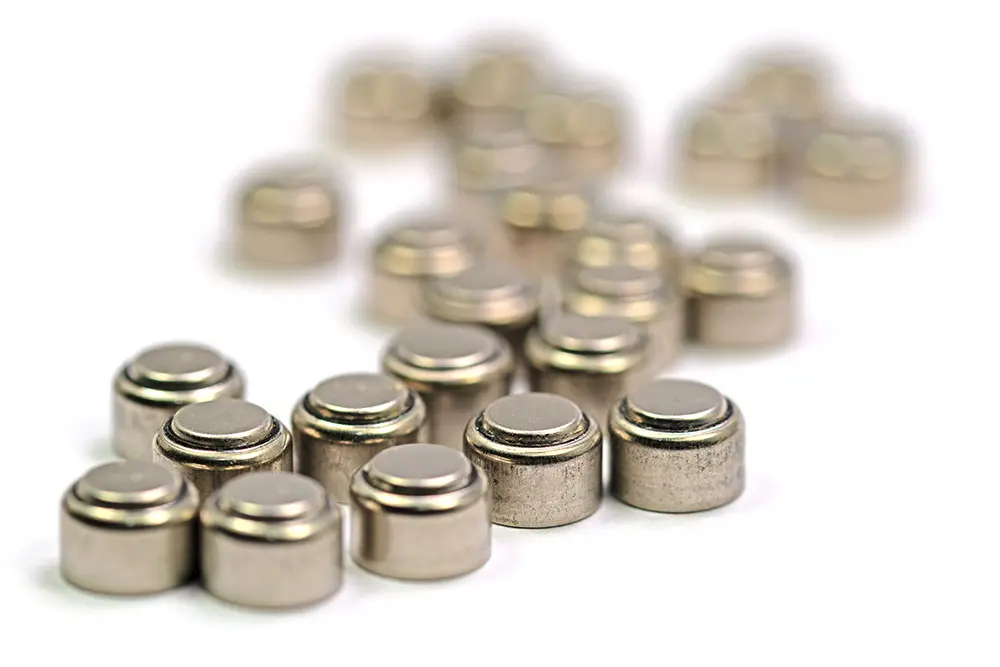 Rechargeable hearing aids have moved from a premium feature to the standard expectation in modern devices. For most patients, they offer a meaningfully better daily experience.
Rechargeable hearing aids use lithium-ion batteries built into the device. You place them in a charging case overnight. Benefits include: no small batteries to purchase or handle, lower ongoing cost, and significantly easier daily management for anyone with dexterity challenges.
Disposable battery aids use zinc-air button batteries. Some patients prefer the control and independence of replaceable batteries. If the battery dies, a quick swap takes seconds rather than waiting for a charge. Extended-wear and deepest IIC styles typically require disposable batteries due to size constraints.
What Modern Hearing Aid Technology Actually Looks Like
Today’s hearing aids are significantly more capable. Here’s what current technology delivers:
- Direct Bluetooth Streaming: Stream calls, music, podcasts, and navigation audio straight from phones/tablets/computers, with no extra device needed
- AI-Powered Sound Processing: Top brands use machine learning to auto-adjust amplification, noise reduction, and directionality in real time
- Directional Microphones: Focus sound toward the speaker while cutting background noise; great for restaurants, meetings, or social settings
- Smartphone App Control: Adjust volume/programs, save location-based settings, stream audio, find lost aids, connect remotely with your audiologist
- Tinnitus Masking: Built-in gentle masking sounds to help manage tinnitus symptoms
- Remote Programming/Telehealth: Audiologists can fine-tune settings remotely via app, cutting down on in-person visits
- Health Features: Fall detection, step counting, and other wellness sensors


Assistive Listening Devices (ALDs)
For specific listening situations that even well-fitted hearing aids find challenging, assistive listening devices can fill the gap. These aren’t replacements for hearing aids. They’re supplements for particular environments.
Personal Remote Microphones
Clip to a companion’s lapel or sit at the center of a table and stream their voice directly to your hearing aids. Transformative in restaurants, cars, and group settings. Works with most Bluetooth-enabled hearing aids.
TV Streamers
Connect to your television and send audio wirelessly to both hearing aids — no more volume wars in the living room.
FM and Loop Systems
Used in public venues: classrooms, theaters, houses of worship, and government buildings where an induction loop or FM transmitter broadcasts audio directly to compatible hearing aids. A telecoil (T-coil) in your hearing aid enables loop compatibility. Ask about this feature during your fitting if you attend venues with these systems.
Alerting Devices
Respond to doorbells, phones, smoke alarms, and alarm clocks with visual alerts (flashing lights) or vibration, ensuring you’re aware of important sounds even without your hearing aids in.
Frequently Asked Questions
What’s the most invisible hearing aid available?
The IIC (Invisible-in-Canal) style sits deepest in the canal and is undetectable in most ears. The Phonak Lyric is the most invisible of all, worn 24/7 for months at a time with nothing visible externally. Both require suitable ear canal anatomy, so not every patient qualifies. RIC devices with slim wires are also very discreet for patients who want features the IIC can’t accommodate.
Can I try hearing aids before committing to buying them?
Yes. Florida law requires a minimum 30-day trial period for prescription hearing aids. We encourage patients to use that time fully. Real-world experience in your own daily life is the only way to truly evaluate a hearing aid.
How long do hearing aids last?
Most prescription hearing aids last 5–7 years with proper care. Rechargeable models’ battery performance may gradually decrease over time, similar to a smartphone. We’ll help you assess when it’s time to consider an upgrade.
Are rechargeable hearing aids better than ones with batteries?
For most patients, yes, especially those with dexterity challenges or busy schedules. The main exception is patients who want very small IIC or CIC styles, which typically can’t accommodate rechargeable batteries. We’ll walk through the tradeoffs during your fitting appointment.
If my hearing changes, can my hearing aids be reprogrammed?
Yes, prescription hearing aids can be adjusted and reprogrammed as your hearing profile changes. This is one of the key advantages over OTC devices, which are static. If your loss progresses beyond what your current device can accommodate, we’ll discuss whether an upgrade is appropriate.

Ready to Find Your Match?
There’s no single “best” hearing aid. There’s the best hearing aid for your loss, your ear, your lifestyle, and your goals. Our audiologist will spend the time to understand all of those before making a recommendation. We carry the leading brands and can fit the full range of styles covered here.
Call Lakeland at 863-450-1179 or Winter Haven at 863-594-1978, or request an appointment online to schedule a hearing evaluation.