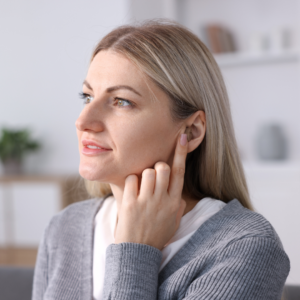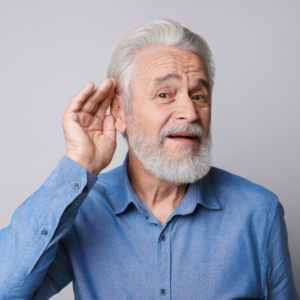
Maintaining dinner dialogue proves demanding when chaotic ambient noise strains your concentration and hearing. Our practice can evaluate hearing in both quiet and noisy conditions to identify what makes these environments difficult. Once we determine the cause of difficult hearing, we can help you find personalized solutions.
Why Do I Hear Well in Quiet but Struggle in Restaurants?
Calm domestic settings establish a positive signal-to-noise ratio, allowing target speech to stand out clearly from faint background noises. Dining rooms present an unfavorable acoustic reversal of this dynamic. Layered diner voices, kitchen activity, foreground music, and room reverberation muddy speech signals, requiring intense mental strain to follow dialogue.
This problem can occur with high-frequency hearing loss, auditory-processing difficulty, or age- and noise-related changes. Visual limitations from low lighting, cognitive fatigue, and sitting farther away from conversational partners amplify speech degradation. Some people have normal results on a basic hearing test but still perform poorly on speech-in-noise testing. Difficulty in restaurants deserves evaluation even when everyday hearing seems normal.
How Audiologists Identify High-Frequency Hearing Loss
Our diagnostic process starts with a detailed case history reviewing problematic listening scenarios, occupational noise exposure, tinnitus, ototoxic medications, and familial genetics.
Pure-tone audiometry measures the softest sounds you can hear at different pitches through air and bone conduction. Sensorineural high-frequency hearing loss demonstrates an audiometric slope reflecting diminished hearing thresholds as sound frequencies climb. Further clinical diagnostics feature tympanometry to evaluate eardrum and middle-ear mechanics as well as word-recognition testing for speech comprehension.
Because a quiet booth does not recreate a busy dining room, speech-in-noise testing can add valuable information. It evaluates sentence-level speech comprehension as competing background babble increases in volume. Together, these results show whether the problem involves audibility, speech clarity, background-noise processing, or a combination of factors.
Auditory Processing Disorders: Impact on Adult Communication
A diagnosed auditory processing disorder affects how the brain’s auditory cortex analyzes, organizes, and interprets sound. The physical ear mechanisms may capture tones correctly, but the central brain pathways struggle to filter competing inputs, parse similar consonants, or interpret rapid speech. We prioritize assessing peripheral auditory acuity before recommending an in-depth central auditory-processing assessment or external medical referrals.
Practical Strategies for Improving Speech Understanding in Noise
Small changes can improve the signal reaching your ears and provide clearer visual cues. Before heading out to eat, select dining spots with quieter acoustic profiles or dine during low-volume hours. Establishments designed with high-walled booths, acoustic wall treatments, heavy fabrics, and carpeting reduce reverberation far better than modern industrial spaces with bare surfaces.
At the restaurant:
- Select a secluded table situated away from prep kitchens, crowded bar stations, loudspeaker zones, and large parties.
- Position your chair against a perimeter wall to diminish competing auditory chatter behind your head.
- Face your conversation partners in good lighting.
- Minimize the physical gap separating you and the person speaking as much as reasonably possible.
- Turn your better-hearing ear toward the specific speaker you want to hear most clearly.
- Prompt companions to rephrase unclear sentences with alternate terminology instead of repeating identical words.
- Validate significant pieces of information directly rather than feigning understanding during dialogue.
- Take brief listening rests outside or in quiet hallways when mental fatigue emerges.
- Request that dining partners articulate words distinctly at an unhurried, natural speed.
- Elevated yelling distorts auditory signals and seldom improves actual phonetic comprehension.
Assistive Hearing Tools and Technology for Complex Acoustic Environments
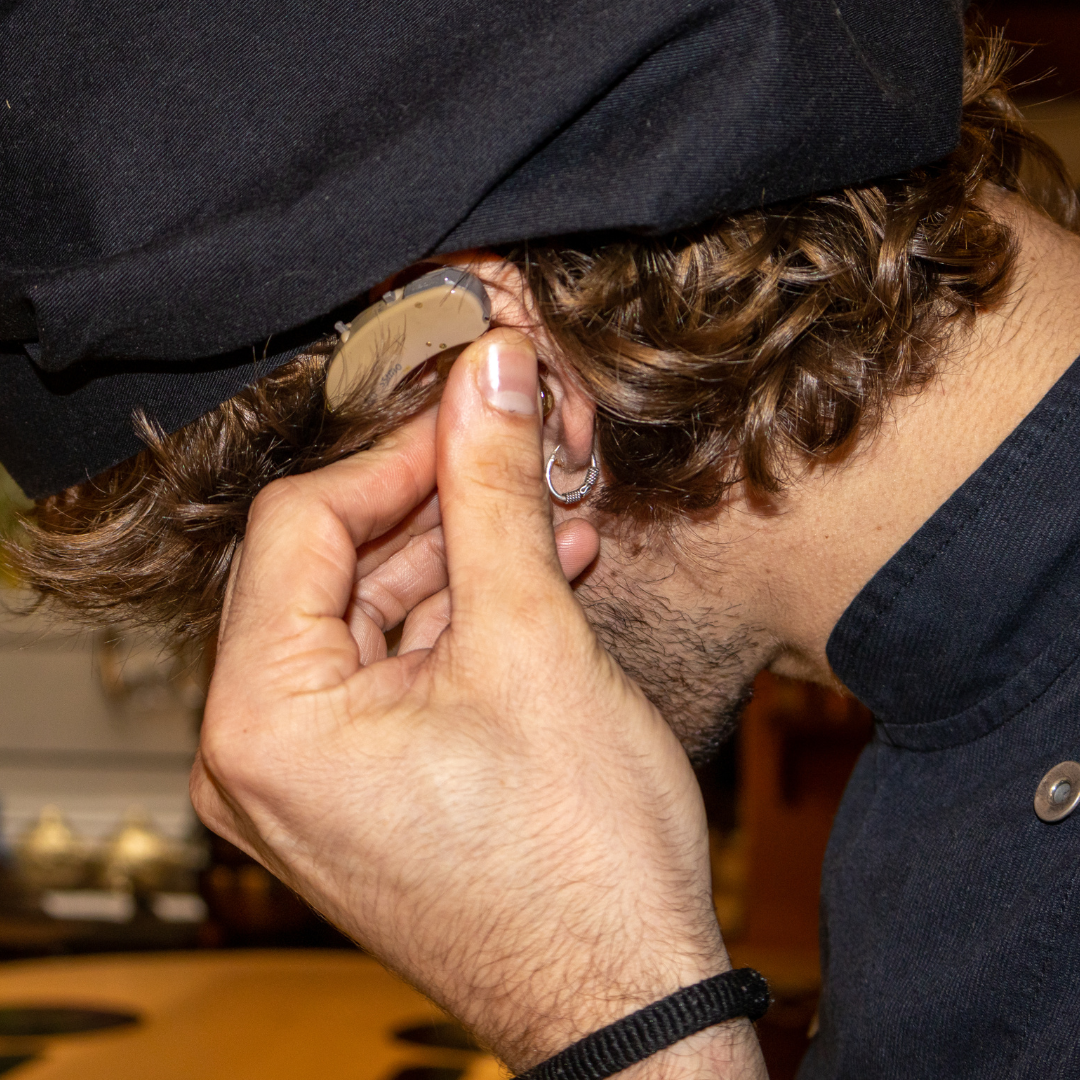
Selecting the ideal assistive technology depends upon underlying diagnosis, specific acoustic challenges, and verified hearing loss. Professionally programmed hearing aids incorporate multi-channel directional microphones, digital noise reduction algorithms, and custom restaurant settings to capture frontal speech while attenuating background interference. Maintaining realistic expectations remains essential, as no auditory device can isolate conversation by removing all surrounding voices.
Utilizing an external remote microphone can deliver a dramatically superior signal-to-noise ratio. The remote unit is attached to the speaker’s clothing or placed nearby, transmitting that voice straight into compatible hearing aids or an audio receiver. This reduces the effects of distance and surrounding noise.
Other clinically valuable tools include:
- Dedicated table microphones engineered to capture small-group dialogue
- Built-in telecoils linking directly with induction hearing-loop systems in public venues
- Smartphone speech-to-text or live-captioning applications
- Modern wireless hearables delivering directional beamforming and sound enhancement
- Sound-level meter applications and community-driven quiet dining guides
We evaluate these technological options, ensure full hardware compatibility, and instruct you on maximizing your selected system.
Clinical Audiology Care for Hearing in Complex Noise
A thorough audiological evaluation expands the diagnostic scope well past simple quiet listening performance. Our audiology team assesses the unique environments, speaking partners, and ambient noise profiles that challenge you to choose targeted diagnostic tools. Your comprehensive workup may involve pure-tone hearing thresholds, middle-ear testing, recorded word recognition, and speech-in-noise measures. Central auditory-processing testing is considered whenever clinical intake and initial test outcomes point toward higher-order deficits.
Rapidly progressing, asymmetrical, or sudden hearing decline warrants an urgent clinical referral to an ear, nose, and throat physician. Personalized patient care establishes the true medical source of your listening problems instead of assuming ambient noise is solely responsible.
Schedule a Hearing Evaluation Today
When dining out causes you to guess at words, detach from family, or experience severe listening exhaustion, book a comprehensive hearing evaluation with us. We will help you navigate hearing in noisy environments by implementing advanced hearing aid options, assistive accessories, or therapeutic auditory strategies tailored to your lifestyle.
Contact our practice today to book your consultation and take a decisive step toward reconnecting in social settings.