
How to Prevent Hearing Loss
Your hearing is one of the senses you rely on most, for conversation, connection, safety, and quality of life. Yet it is one of the least protected. While age-related hearing loss cannot be entirely stopped, a significant proportion of all hearing loss, particularly noise-induced hearing loss, which affects an estimated 40 million American adults, is completely preventable.
The problem is that hearing damage is painless and invisible as it happens. Unlike a burn or a cut, there is no immediate signal that your cochlear hair cells are being damaged by a loud concert, a power tool, or years of city traffic. By the time the effects show up on a hearing test or in your daily conversations, permanent damage has already occurred.
Prevention is therefore not just about wearing earplugs. It encompasses how you listen, what you eat, how you manage your overall health, which medications you take, and how often you have your hearing checked. This guide covers all of it.
Most hearing loss develops silently over years. By the time you notice it, significant damage has already been done. The good news: a large portion of hearing loss is preventable. Our audiologists in Lakeland and Winter Haven, FL explain what actually works.
How Your Ears Work
Hearing is a remarkable process that happens almost instantaneously and involves precise teamwork between your ears and your brain.
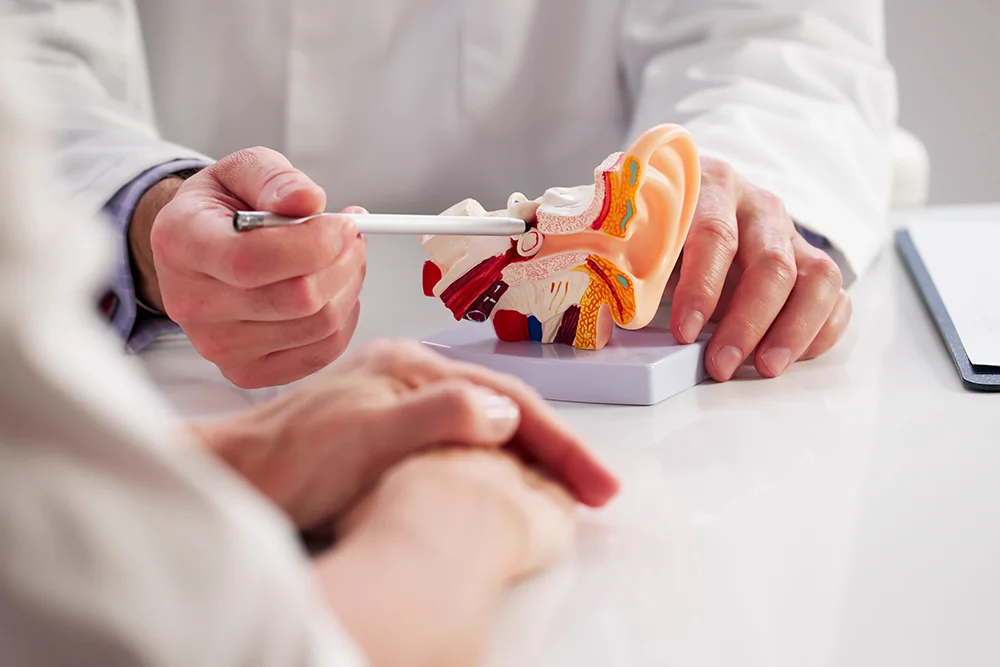
Sound waves enter your outer ear (the visible part called the pinna) and travel down the ear canal to the eardrum. When sound waves strike the eardrum, it vibrates. Those vibrations then travel through three tiny bones in the middle ear: the malleus (hammer), incus (anvil), and stapes (stirrup). Together, these bones amplify the sound and transmit it to the fluid-filled cochlea in the inner ear.
Inside the cochlea, thousands of microscopic hair cells convert these vibrations into electrical signals. The auditory nerve carries those signals to your brain, which interprets them as the sounds you recognize: a voice, music, a bird singing.
The entire process happens in milliseconds. But when any part of this chain is disrupted, whether through damage, disease, or age, hearing loss results. Unfortunately, the hair cells in the cochlea cannot regenerate once lost. This is why early detection and treatment are so important.
Why Hearing Prevention Matters: The Damage Is Permanent
Inside your inner ear are approximately 15,000 microscopic hair cells, the cochlear stereocilia, that convert sound vibrations into electrical signals your brain interprets as sound. These hair cells are the foundation of your hearing, and they have one critical weakness: they cannot regenerate.
When you are exposed to sound that is too loud for too long, these hair cells are physically damaged or destroyed: bent, broken, or killed by the mechanical force of the sound wave. Unlike skin cells or liver cells, cochlear hair cells in humans do not grow back. Each exposure above safe levels causes cumulative, permanent damage, and you will not feel it happening.
This is why the noise-induced hearing loss that appears on someone’s audiogram at age 55 was likely caused by decades of exposure starting in their 20s and 30s: at concerts, on construction sites, mowing the lawn, or listening to music too loudly. By the time the loss shows up, the window for prevention has largely passed.
The single most important thing you can do for your hearing health is to start protecting it now, before any loss is detectable.
How Loud Is Too Loud? Understanding Safe Sound Exposure
Sound is measured in decibels (dB). The critical threshold for hearing damage is 85 decibels, roughly the volume of heavy city traffic or a loud restaurant. Above this level, the amount of time you can safely be exposed decreases rapidly with every 3dB increase in volume.
The following table shows common sounds, their typical decibel levels, and the safe exposure limits set by the National Institute for Occupational Safety and Health (NIOSH):
| Sound | Decibel Level | Safe Exposure Limit | Risk Level |
|---|---|---|---|
| Normal conversation | 60 dB | No limit | Safe |
| Dishwasher / AC unit | 70 dB | No limit | Safe |
| City traffic (inside car) | 85 dB | 8 hours | Caution |
| Bulldozer / heavy machinery | 88 dB | 4 hours | Caution |
| Lawn mower / power tools | 94 dB | 1 hour | Caution |
| Nightclub / bar | 97 dB | 30 minutes | Danger |
| Motorcycle / chainsaw | 100 dB | 15 minutes | Danger |
| Sporting event / stadium | 105 dB | 4 minutes | Danger |
| Rock concert | 110 dB | 2 minutes | Danger |
| Ambulance siren (at source) | 115 dB | 30 seconds | Danger |
| Firearms / gunshot | 130–165 dB | < 1 second | Extreme |
| Fireworks (nearby) | 150 dB | Immediate risk | Extreme |
A key rule of thumb: if you need to raise your voice to be heard by someone at arm’s length, the environment is loud enough to damage your hearing with prolonged exposure.
10 Ways to Prevent Hearing Loss
1. Wear Hearing Protection in Loud Environments

The most direct way to prevent noise-induced hearing loss is to wear appropriate hearing protection whenever you are in an environment at or above 85 decibels. This includes concerts, power tool use, lawn mowing, motorsports events, and industrial worksites.
There are three main types of hearing protection:
Foam Earplugs
The most widely available and affordable option. When inserted correctly, foam earplugs reduce noise by 15–30 dB (NRR rating). They are best for occasional use. Important: most people insert them incorrectly, dramatically reducing effectiveness. Roll the plug into a tight cylinder, pull the top of your ear up and back to open the canal, insert deeply, and hold for 30 seconds while it expands.
Earmuffs
Fit completely over the ear and reduce noise by approximately 15–30 dB. They do not require correct insertion and are more consistent in their protection. Can be doubled with earplugs for extreme noise environments (e.g., firearms use, jet engines).
Custom-Molded Hearing Protection
Made from impressions of your ear canals by an audiologist. Custom plugs provide a superior, consistent fit, are more comfortable for all-day wear, and last for years. Musicians’ custom earplugs attenuate sound evenly across frequencies, preserving sound quality while reducing volume. Available at Aspire Hearing Solutions.
2. Follow the 60/60 Rule for Personal Audio Devices
Personal audio devices, earbuds, headphones, and earphones, are one of the most significant and growing causes of noise-induced hearing loss, particularly in younger people. The World Health Organization estimates that 1.1 billion people between the ages of 12 and 35 are at risk of hearing loss from unsafe use of personal audio devices.
The 60/60 rule is the most practical guideline:
- Keep volume at or below 60% of maximum
- Listen for no more than 60 minutes at a time, then give your ears a break
Additional tips for safe personal audio use:
- Use over-ear headphones rather than in-ear earbuds where possible. In-ear devices direct sound more directly at the eardrum
- Consider noise-cancelling headphones. They reduce the need to turn up volume to overcome background noise, which is a primary driver of unsafe listening levels
- Enable the volume limiting features available on most smartphones (iOS: Settings > Sounds & Haptics; Android: Sound & Vibration settings)
- Download a free sound meter app (NIOSH SoundLevel Meter, Decibel X) to check the actual volume levels you listen at
- Be especially cautious during commutes. Background noise on trains, buses, and planes causes people to unknowingly raise their volume to dangerous levels
3. Give Your Ears Recovery Time After Loud Events
Your ears need time to recover after significant noise exposure. After attending a concert, sporting event, or extended time in a noisy environment, your cochlear hair cells are temporarily fatigued, a condition known as a temporary threshold shift. During this recovery period, your hearing may feel muffled or your ears may ring.
Give your ears at least 16–18 hours of quiet after intense noise exposure. Repeated exposure without adequate recovery converts temporary threshold shifts into permanent hearing damage. If tinnitus (ringing) persists for more than 24 hours after noise exposure, this is a warning sign worth discussing with an audiologist.
4. Protect Your Ears in Florida’s Specific Environments
Florida residents and Polk County workers face specific noise exposures that are worth addressing directly:
Outdoor Recreation
Hunting, shooting sports, powerboating, and motorsports are all associated with high noise exposures. Florida has one of the highest rates of recreational firearm use in the US. Every gunshot exceeds 130 dB without protection.
Agriculture and Landscaping
Florida’s agricultural industry involves significant machinery exposure. Tractors, irrigation pumps, and harvesting equipment routinely exceed 90–100 dB over a full working day.
Construction
Polk County’s ongoing growth means construction noise is pervasive. Workers and those living near construction sites should be aware of cumulative daily exposure.
Outdoor Concerts and Festivals
Florida’s year-round outdoor event calendar means extended noise exposure in recreational settings. Lakeland’s outdoor venues and the Strawberry Festival circuit are popular but can exceed 100 dB at close range.
Swimming and Water Sports
Florida’s water culture increases the risk of swimmer’s ear (otitis externa), which if left untreated can affect hearing. Dry ears thoroughly after swimming and consider custom swim plugs if you swim regularly.
5. Be Aware of Ototoxic Medications
More than 200 medications are known to be ototoxic, meaning they have the potential to damage the cochlea or auditory nerve as a side effect, causing hearing loss, tinnitus, or balance problems. Many patients are unaware their medication could be affecting their hearing.
The most clinically significant categories include:
- Aminoglycoside antibiotics (gentamicin, streptomycin, tobramycin): used for serious bacterial infections; cochlear damage can be permanent
- Platinum-based chemotherapy drugs (cisplatin, carboplatin): SNHL is a well-documented consequence, particularly in children treated for cancer
- Loop diuretics (furosemide/Lasix): high-dose or IV administration carries hearing risk, especially in combination with aminoglycosides
- High-dose or long-term aspirin and NSAIDs: can cause reversible tinnitus and hearing changes; usually resolves when the drug is stopped
- Quinine (for malaria and leg cramps): can cause tinnitus and hearing loss
What to do: if you are prescribed any potentially ototoxic medication, ask your doctor or pharmacist about the hearing-related side effects. Request a baseline hearing evaluation before starting treatment and follow-up monitoring during and after. Report any changes in hearing or new tinnitus to your prescriber promptly. Do not stop prescribed medications without medical guidance.
6. Manage Your Overall Health: It Directly Affects Your Hearing
Your hearing health is directly connected to your cardiovascular system, blood sugar regulation, and other systemic health factors. Conditions that restrict blood flow to the delicate structures of the inner ear can accelerate hearing loss or increase its severity.
Diabetes
People with diabetes are twice as likely to experience hearing loss as those without. High blood glucose levels damage blood vessels throughout the body, including those supplying the cochlea. Careful blood sugar management helps protect both cardiovascular and auditory health.
Cardiovascular Disease and Hypertension
The inner ear is extremely sensitive to changes in blood flow. High blood pressure, atherosclerosis, and poor cardiovascular fitness all reduce cochlear blood supply. Regular cardiovascular exercise, blood pressure management, and a heart-healthy diet support long-term hearing health.
Smoking
Research shows that smokers are significantly more likely to develop hearing loss than non-smokers. Nicotine constricts blood vessels, reducing oxygen supply to the cochlea, while carbon monoxide affects oxygen delivery in the blood. Even exposure to secondhand smoke increases hearing loss risk.
Obesity
Associated with a higher prevalence of hearing loss in multiple studies, likely through its relationship with cardiovascular risk factors, inflammation, and metabolic dysfunction.
The hearing-health takeaway: the lifestyle choices that protect your heart, regular exercise, not smoking, managing blood pressure and blood sugar, and maintaining a healthy weight, also protect your hearing.
7. Eat for Your Ears: Nutrients That Support Hearing Health
Emerging research suggests that specific nutrients play a measurable role in protecting cochlear hair cells, supporting inner ear blood flow, and reducing the risk of age-related and noise-induced hearing loss. While diet alone cannot prevent all hearing loss, a nutrient-rich diet is one of the most accessible and sustainable protective strategies available.
| Nutrient | Role in Hearing Health | Best Food Sources |
|---|---|---|
| Omega-3 Fatty Acids | Support blood vessel health in the inner ear; associated with lower hearing loss risk in studies (2+ servings of fish/week) | Salmon, tuna, sardines, walnuts, flaxseeds, chia seeds |
| Magnesium | Acts as a protective barrier for cochlear hair cells; shown to help prevent noise-induced hearing loss when combined with vitamins A, C & E | Bananas, avocado, spinach, broccoli, dark chocolate, almonds |
| Potassium | Regulates fluid in the inner ear; essential for converting sound into electrical signals | Bananas, potatoes, spinach, yogurt, oranges, tomatoes, lima beans |
| Zinc | Supports immune function and may improve sudden sensorineural hearing loss; some evidence for tinnitus reduction | Oysters, beef, pumpkin seeds, cashews, dark chocolate |
| Folate (Folic Acid) & B12 | Deficiency linked to 39% greater hearing impairment; adequate intake associated with 20% reduction in age-related hearing loss | Leafy greens, legumes, eggs, dairy, fortified cereals, lean meats |
| Vitamins A, C & E | Antioxidants that neutralize free radicals: the damaging molecules generated by loud noise exposure that destroy hair cells | Citrus fruits, berries, nuts, seeds, sweet potato, red pepper, broccoli |
| Vitamin D | Deficiency associated with bilateral hearing impairment in older adults; supports bone density around the middle ear | Fatty fish, fortified dairy, egg yolks, sunlight exposure |
Foods to limit: high-sodium diets are associated with Ménière’s disease flare-ups (the sodium causes fluid retention in the inner ear). Excessive sugar and saturated fat are linked to cardiovascular risk factors that indirectly harm hearing. Ultra-processed foods high in trans fats and preservatives have been associated with increased hearing loss risk in observational studies.
8. Practice Safe Ear Care: Stop Using Cotton Swabs
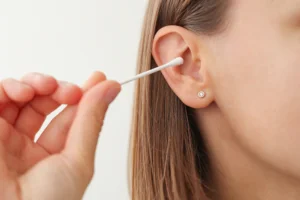
Cotton swabs (Q-tips) are one of the most common causes of ear canal injury and earwax impaction, yet their packaging still suggests using them for ear cleaning. The reality: inserting anything into the ear canal typically pushes wax deeper toward the eardrum rather than removing it, and can cause:
- Earwax impaction: pushing wax against the eardrum causes muffled hearing, fullness, and in some cases pain
- Eardrum perforation: the ear canal is short and the eardrum is close; even minor force with a swab can cause a perforation
- Ear canal infection: cotton swabs remove the protective layer of earwax and can introduce bacteria from the swab itself
The outer third of the ear canal is self-cleaning. Earwax naturally migrates outward through jaw movement. In most people, no intervention is needed. If you feel wax buildup is affecting your hearing, the appropriate response is to use over-the-counter ear drops to soften the wax, or to have it professionally removed by an audiologist.
Additional ear hygiene tips:
- Keep ears dry after swimming: tilt your head and gently tug your earlobe to help water drain. Avoid using cotton swabs to dry the canal.
- Use custom swim plugs if you swim frequently: particularly important in lakes and outdoor pools where bacterial contamination is higher
- Never use ear candles: there is no clinical evidence they remove earwax effectively, and they carry real risks including burns, wax deposits in the canal, and eardrum damage
9. Stay Current on Vaccinations
Several infectious diseases are known causes of sensorineural hearing loss, and many are vaccine-preventable. Ensuring your vaccinations are up to date is a straightforward way to eliminate an entire category of hearing loss risk:
Measles (MMR vaccine)
Measles can cause bilateral SNHL; now rare in vaccinated populations
Mumps (MMR vaccine)
Historically one of the leading causes of sudden unilateral SNHL in children
Meningitis (meningococcal and Hib vaccines)
Bacterial meningitis can cause profound bilateral SNHL as a complication, particularly in young children; cochlear ossification following meningitis can complicate cochlear implantation
Rubella (MMR vaccine)
Congenital rubella syndrome is a cause of congenital SNHL when infection occurs during pregnancy
For pregnant women, avoiding cytomegalovirus (CMV) exposure is also important. CMV is the most common non-genetic cause of congenital hearing loss and can be transmitted through close contact with young children. Practice thorough handwashing and avoid sharing utensils or cups with young children during pregnancy.
10. Get Regular Hearing Evaluations
Most adults have never had a hearing test. Yet regular hearing evaluation is one of the most powerful prevention and early-detection tools available, because it establishes a baseline against which future changes can be measured.
By the time hearing loss becomes noticeable in daily life, a patient has typically already lost a significant amount of hearing, and the window for early intervention has narrowed. An audiogram can detect subclinical hearing loss years before it affects daily communication, allowing treatment to begin earlier and outcomes to be significantly better.
Recommended hearing evaluation schedule:
- Adults under 50 with no risk factors: every 3–5 years
- Adults 50–60: every 1–2 years
- Adults 60 and over: annually
- Any age, with occupational or recreational noise exposure: annually
- Any age, after starting ototoxic medication: baseline before treatment, monitoring during and after
- Any age, after a sudden change in hearing: immediately
A hearing evaluation at Aspire Hearing Solutions is comprehensive, painless, and typically takes 45–60 minutes. You will leave with a complete picture of your hearing health and, if needed, a clear treatment plan.
Frequently Asked Questions: Hearing Loss Prevention
Can hearing loss be prevented?
A significant proportion of hearing loss, particularly noise-induced hearing loss, which is the second most common type, is entirely preventable. Noise-induced hearing loss accounts for approximately 40 million cases in American adults and is caused by excessive sound exposure that can be reduced or avoided with protection and safe listening habits. Age-related hearing loss is not fully preventable, but its progression can be slowed through cardiovascular health, diet, and avoiding additional noise damage. Other preventable forms include hearing loss from vaccine-preventable infections and some medication-related cases.
What is the most effective way to prevent hearing loss?
Consistently wearing appropriate hearing protection when exposed to sounds above 85 decibels is the single most effective prevention strategy. However, hearing loss prevention also involves safe personal audio habits (60/60 rule), managing cardiovascular health, eating a nutrient-rich diet, staying up to date on vaccinations, practicing safe ear care, being aware of ototoxic medications, and getting regular hearing evaluations. No single strategy is sufficient. A combination approach offers the best protection.
At what volume should I listen to music to protect my hearing?
The 60/60 rule is the most widely recommended guideline: no more than 60% of maximum volume, for no more than 60 minutes at a stretch. At 60% maximum volume on most devices, you should still be able to hear someone speaking to you from nearby. If you need to raise your voice to be heard while wearing headphones, the volume is too high. Enabling the volume limit feature on your smartphone or media player can enforce this automatically.
Are foam earplugs actually effective?
Yes, when inserted correctly, foam earplugs are highly effective, reducing noise by 15–30 decibels. The key word is ‘correctly.’ Most people do not insert foam earplugs deeply enough to achieve their rated noise reduction. To insert properly: roll the plug tightly, pull the top of your ear up and back to straighten the canal, insert deeply, and hold for 30 seconds while the foam expands. Custom-molded earplugs are more effective in practice because they do not require correct insertion technique. They fit perfectly every time.
Can diet really protect your hearing?
Emerging research suggests that certain nutrients meaningfully contribute to hearing health: particularly omega-3 fatty acids, magnesium, potassium, folate, zinc, and vitamins A, C, and E. These nutrients support inner ear blood flow, protect cochlear hair cells from free radical damage (particularly from noise exposure), and regulate the fluid balance essential for sound transduction. A nutrient-dense Mediterranean-style diet has been associated with lower rates of age-related hearing loss in multiple studies. While diet cannot reverse existing hearing loss, it is a legitimate and accessible preventive strategy.
Does smoking cause hearing loss?
Yes. Multiple studies have found that smokers are significantly more likely to develop hearing loss than non-smokers. Nicotine constricts blood vessels, reducing oxygen and nutrient supply to the cochlea. Carbon monoxide impairs oxygen delivery in the blood more broadly. Secondhand smoke also increases hearing loss risk. Quitting smoking is beneficial for hearing health at any age. Blood vessel function begins to improve within weeks of cessation.
How often should I get a hearing test?
Adults under 50 with no specific risk factors should have a hearing evaluation every 3–5 years. Adults over 60 should be tested annually. Anyone with occupational or recreational noise exposure, a family history of hearing loss, or who is starting ototoxic medication should have a baseline test and then annual follow-ups. If you notice any sudden or unexplained change in hearing at any age, seek evaluation promptly. Sudden hearing loss is a medical emergency.
Can lost hearing be restored?
It depends on the type. Temporary threshold shifts, temporary muffling or reduced hearing immediately after noise exposure, typically resolve within 16–18 hours as cochlear hair cells recover. However, if the noise exposure was severe or repeated, some of that temporary loss becomes permanent. Most sensorineural hearing loss is permanent because cochlear hair cells do not regenerate. Conductive hearing loss caused by earwax, infections, or structural problems is frequently reversible with treatment. This is why any persistent hearing change lasting more than a day or two should be evaluated.
Are children’s ears more vulnerable to hearing damage?
Yes. Children’s ears are not more fragile than adult ears in terms of the decibel threshold for damage. 85 dB is equally damaging regardless of age. However, children have a longer lifetime ahead of them in which cumulative damage can accumulate, and they are more likely to use personal audio devices at unsafe volumes without understanding the risk. Children who regularly attend loud events, use earbuds for gaming, or are exposed to occupational noise (through parents’ work environments) benefit from the same protection principles as adults. Parents should model safe listening habits and use volume-limiting headphones designed for children.
Protect Your Hearing: Start Today
The best time to start protecting your hearing was before any damage occurred. The second best time is right now. Whether you want custom hearing protection fitted, a baseline hearing evaluation to understand your current hearing health, or simply want to know more about the options available to you, our team at Aspire Hearing Solutions is ready to help.
We serve patients across Polk County, including Lakeland, Winter Haven, Haines City, Dundee, Frostproof, and surrounding communities, at two convenient locations.